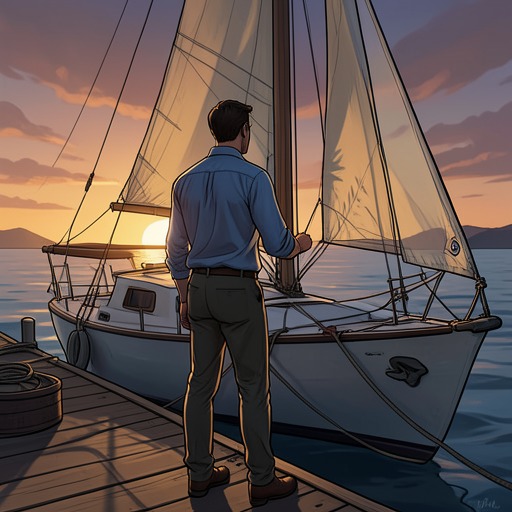
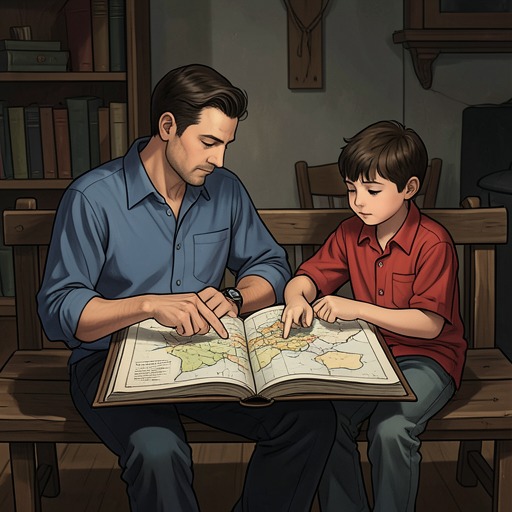
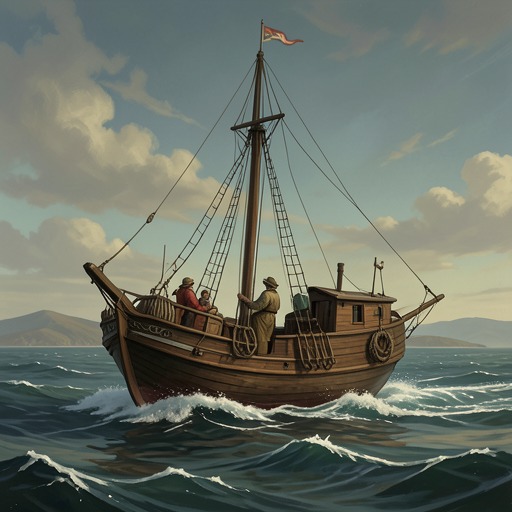
July 28, 1988, the night before Michael’s twelfth birthday
Michael’s Disappearance
Years after his disappearance, [Michael](entity:character-recall-character-michael-119cca2a9432) explains that he has kept silent because Kensuke asked him to wait at least ten years before telling the story. Now he wants to set the record straight and honor the man who became his friend. The account begins with a childhood that seemed ordinary, before a family crisis carried Michael far from home.
Before Michael is eleven
A Familiar Childhood
[Michael](entity:character-recall-character-michael-119cca2a9432) lives with his parents and their sheepdog, [Stella Artois](entity:character-recall-character-stella-artois-83b4d51829ef). He attends school, delivers papers to save for a mountain bike, and spends his afternoons playing muddy soccer with [Eddie Dodds](entity:character-recall-character-eddie-dodds-61b4a7c736ca) and the other boys. Sundays are happiest on the family dinghy, where his mother takes the tiller and his father enjoys the work of sailing.
When Michael is nearly eleven
The Brickworks Closure
A letter arrives announcing that the brickworks will close and both of [Michael](entity:character-recall-character-michael-119cca2a9432)’s parents will lose their jobs. The news ends their Sunday sailing and brings a strained silence into the house; arguments replace their former ease, while [Michael’s father](entity:character-recall-character-michael-e38c176d15da) withdraws into joblessness and yachting magazines. With Eddie gone and the Mudlarks dissolved, Michael feels the rest of his life coming apart too.
After the brickworks closure
The Plan to Move South
[Michael](entity:character-recall-character-michael-119cca2a9432) comes home from his paper route to find his mother crying. She tells him that his father has sold the car, intends to move the family south, and has gone ahead to find them a place. She refuses to leave their home, but Michael sees no reason to stay and hopes that moving might bring him closer to Eddie.
A week or so after Michael’s father leaves
The Peggy Sue Revealed
A phone call changes the family’s direction: [Michael’s father](entity:character-recall-character-michael-e38c176d15da) sounds like his old self and says he has found them a place in [Fareham](entity:location-recall-location-fareham-f6817044140a). When the family arrives, he leads them not to a house but to a marina, where he unveils the [Peggy Sue](entity:object-recall-object-peggy-sue-0d2879feba0b) as their new home. He has decided they will sail around the world.
At the marina, before the training period
The Family Chooses the Voyage
[Michael’s father](entity:character-recall-character-michael-e38c176d15da) explains that he has used their savings, severance pay, and the money from the car to buy a forty-two-foot yacht. He proposes six months of training and a voyage lasting a year or longer, with [Michael’s mother](entity:character-recall-character-michael-2aa42c3c4fd7) as skipper and [Michael](entity:character-recall-character-michael-119cca2a9432) taught aboard the boat. Despite recognizing the risks, she agrees, and Michael welcomes the adventure.
During preparations for the voyage
Grandma’s Warnings
[Grandma](entity:character-recall-character-grandma-00905361916a) visits and warns that the plan is reckless, listing dangers from icebergs and hurricanes to pirates and freak waves. Her fears unsettle [Michael](entity:character-recall-character-michael-119cca2a9432), but the family has already committed to the voyage and feels bound together by its shared recklessness. Their departure becomes a deliberate leap into the unknown, not a passing fantasy.
The months before September 10, 1987
Training with Barnacle Bill
The family discovers that handling the [Peggy Sue](entity:object-recall-object-peggy-sue-0d2879feba0b) is far harder than dinghy sailing. [Barnacle Bill](entity:character-recall-character-barnacle-bill-3482014db5ca) trains them sternly, treating [Michael and Stella Artois](entity:relation-recall-relation-michael-and-stella-a-0d8fe7a5c4e0) as nuisances, but his expertise teaches them to respect the sea and manage the yacht. [Michael and his father](entity:relation-recall-relation-michael-and-his-fath-1660586db9a4) share their fear during dangerous weather, while his mother steadily masters navigation and command.
September 10, 1987
The Voyage Begins
With the yacht stocked and prepared, the family sets sail from [Southampton](entity:location-recall-location-southampton-f8a0f0273801) on its round-the-world voyage. [Grandma](entity:character-recall-character-grandma-00905361916a) and friends gather to wave them off; [Eddie Dodds](entity:character-recall-character-eddie-dodds-61b4a7c736ca) gives [Michael](entity:character-recall-character-michael-119cca2a9432) a signed soccer ball as a lucky mascot. As they pass the [Isle of Wight](entity:location-recall-location-isle-of-wight-24c46f2f0525), [Stella Artois](entity:character-recall-character-stella-artois-83b4d51829ef) falls quiet, and the family understands that the adventure is real and there is no turning back.
The first days and weeks at sea
Learning Life at Sea
The family adjusts to constant damp, hard work, and the routines of a small yacht. [Michael](entity:character-recall-character-michael-119cca2a9432) takes turns at the wheel, tends sails, helps his father repair things, and keeps the galley and boat in order. [Stella Artois](entity:character-recall-character-stella-artois-83b4d51829ef) watches for sea life, barking at dolphins and other creatures, and comforts Michael and his seasick mother when rough weather frightens or exhausts them.
After the voyage settles into routine
Lessons Beyond School
[Michael](entity:character-recall-character-michael-119cca2a9432)’s parents insist that he continue his studies aboard the yacht. His work combines mathematics with reports on the countries they visit, drawings of wildlife, and practical navigation taught by his mother. During solitary night watches beneath the stars, he also keeps a private journal, discovering that writing comes naturally when he can speak directly onto the page.
September 20, 1987
The Bay of Biscay Storm
In his journal, [Michael](entity:character-recall-character-michael-119cca2a9432) recalls that the family makes far less progress than planned and is battered by a Force 9 gale, sometimes Force 10, in the [Bay of Biscay](entity:location-recall-location-bay-of-biscay-bf450b23ba39). The [Peggy Sue](entity:object-recall-object-peggy-sue-0d2879feba0b) survives waves that seem to pitch its bow toward the moon and plunge it toward the seabed. The family reaches [Spain](entity:location-recall-location-spain-336a02c89dc7), shaken but more confident in the yacht and one another.
October 11, 1987
Africa on the Horizon
The family sails down Africa’s west coast, carefully avoiding the [Doldrums](entity:location-recall-location-doldrums-c100e01d29c2), where a becalmed yacht could drift for weeks. [Michael](entity:character-recall-character-michael-119cca2a9432) watches flying fish and hears about a basking shark, recording wildlife for his schoolwork. He sends a card to Eddie from the [Cape Verde Islands](entity:location-recall-location-cape-verde-islands-2692f409727d) and misses the friend who once shared his everyday adventures.
November 16, 1987
A Game in Brazil
After repairs in [Recife](entity:location-recall-location-recife-29f493c50a06), [Michael and his father](entity:relation-recall-relation-michael-and-his-fath-1660586db9a4) begin kicking Eddie’s soccer ball on the beach, and local children join them for a match. [Michael](entity:character-recall-character-michael-119cca2a9432) names his side the Mudlarks; his mother joins them, and they beat the [Brazil](entity:location-recall-location-brazil-c5c26642be39) team five to three. The ordinary pleasures of soccer briefly make a foreign shore feel familiar.
December 25, 1987
Christmas at Sea
The family celebrates Christmas aboard the [Peggy Sue](entity:object-recall-object-peggy-sue-0d2879feba0b) with soggy crackers, [Grandma](entity:character-recall-character-grandma-00905361916a)’s pudding, and carols heard on the radio. [Michael](entity:character-recall-character-michael-119cca2a9432) gives his parents drawings, and they give him a knife from [Rio de Janeiro](entity:location-recall-location-rio-de-janeiro-c08a0245d84a). A distant yacht passes, but once it disappears the sea feels empty again, even as the family’s chess rivalry provides a familiar domestic ritual.
January 1, 1988
A Stop in Cape Town
The family reaches [Cape Town](entity:location-recall-location-cape-town-f6ea4334d11c) and decides they can afford to stay for several weeks to see wildlife in [South Africa](entity:location-recall-location-south-africa-49123e8bd978). [Michael](entity:character-recall-character-michael-119cca2a9432) is thrilled by the prospect of elephants and lions, and notices that his parents now laugh together more easily than they did at home. His mother’s stomach cramps return, though she resists his father’s urging to see a doctor.
February 7, 1988
Stella Overboard
Far out in the [Indian Ocean](entity:location-recall-location-indian-ocean-a16d580892d8), [Stella Artois](entity:character-recall-character-stella-artois-83b4d51829ef) unexpectedly falls from the bow. [Michael](entity:character-recall-character-michael-119cca2a9432) shouts and points while his parents carry out the man-overboard drill, but several approaches fail as the waves separate the dog from the yacht. On their last attempt, the family hauls her aboard by her collar and tail; afterward, [Michael’s mother](entity:character-recall-character-michael-2aa42c3c4fd7) orders that Stella must wear a safety harness on deck.
April 3 to May 28, 1988
Australia and Uncle John
The family reaches [Perth](entity:location-recall-location-perth-609807d84777) after a long crossing from Africa, delighted to have sailed halfway around the world. [Michael’s mother](entity:character-recall-character-michael-2aa42c3c4fd7)’s abdominal pain persists, so she finally sees a doctor, who thinks it is probably something she ate. The family then spends nearly six weeks with [Uncle John](entity:character-recall-character-uncle-john-8d33ce140a74), exploring his farm and the Australian countryside before returning to the [Peggy Sue](entity:object-recall-object-peggy-sue-0d2879feba0b).
After May 28, 1988
Storms off Australia
Back at sea, the family plans to visit [Sydney](entity:location-recall-location-sydney-5250126580b6) and the Great Barrier Reef before heading through the [Coral Sea](entity:location-recall-location-coral-sea-36134e7630d9) toward Papua New Guinea. The weather turns hot, heavy, and windless, and [Michael](entity:character-recall-character-michael-119cca2a9432) senses that a storm is coming. His mother’s illness and the yacht’s fragile systems make the worsening conditions especially dangerous.
July 28, 1988
The Family in Peril
As [Michael](entity:character-recall-character-michael-119cca2a9432)’s twelfth birthday approaches, repeated storms drive the yacht north across the [Coral Sea](entity:location-recall-location-coral-sea-36134e7630d9). The rudder cable has snapped, the self-steering has failed, and someone must remain at the wheel; Michael and his exhausted father take the strain while his mother is too ill to navigate. She refuses a Mayday call, and Michael fears they no longer know their position.
The night of July 28, 1988
The Boy Goes Overboard
On a dark, calm night, [Stella Artois](entity:character-recall-character-stella-artois-83b4d51829ef) barks from the bow without her harness. [Michael](entity:character-recall-character-michael-119cca2a9432) leaves the wheel to retrieve her, carrying Eddie’s soccer ball to coax her back; the ball slips into the sea, and the yacht veers violently as he tries to lift Stella. With his arms full, Michael cannot catch the rail and is thrown overboard.
The night of July 28–29, 1988
Alone in the Black Sea
The lights of the [Peggy Sue](entity:object-recall-object-peggy-sue-0d2879feba0b) vanish, leaving [Michael](entity:character-recall-character-michael-119cca2a9432) certain that his calls cannot reach his parents. He finds the soccer ball, clings to its buoyancy, and tries to float rather than waste strength swimming aimlessly. Cold, fear, and exhaustion overtake him as he sings songs, especially “[Ten Green Bottles](entity:expression-recall-expression-ten-green-bottles-f9c8e233c9e4),” to keep himself company.
The morning after July 28, 1988
Washed Ashore
[Michael](entity:character-recall-character-michael-119cca2a9432) wakes on a beach beside [Stella Artois](entity:character-recall-character-stella-artois-83b4d51829ef), with no sign of the yacht or his parents. Confused memories suggest he may have dreamed of being rescued, but the missing soccer ball and empty sea make clear that he has washed ashore alone. He hears animal calls from the forest and recognizes what he thinks are gibbons from a visit to the zoo.
The first morning on the island
The Island from the Summit
[Michael](entity:character-recall-character-michael-119cca2a9432) climbs through the forest to a rocky summit, hoping to spot a sail or signs of people. Instead he sees sea on every side and realizes he is on a small, uninhabited-looking island. Its beauty briefly lifts his spirits: he and Stella are alive, and he tells her that they must find water and food while waiting for his parents.
The first day on the island
A Search for Water
[Michael](entity:character-recall-character-michael-119cca2a9432) and Stella search the shoreline and forest for fresh water and edible food. They find high fruit, empty coconuts, and salty pools, but no stream; the jungle’s rustlings and unseen watchers make him fear the animals following them. By nightfall they are exhausted and thirsty, and Michael shelters with Stella in a small cave.
The morning after Michael’s first night
The First Food Offering
Stella discovers a tin bowl of water on the rocks above the cave, beside fish and red bananas laid out under another tin. [Michael](entity:character-recall-character-michael-119cca2a9432) eats ravenously and shares fish with Stella, then realizes that someone has quietly provided the meal. He calls out his thanks and scratches a message on the rock asking the unseen benefactor who they are.
The second day on the island
Fire from the Wreckage
[Michael](entity:character-recall-character-michael-119cca2a9432) finds a rusted piece of ship’s hull buried in the sand and a shard of glass hot in the sun. Remembering how he once made fire with Eddie, he focuses sunlight through the glass until the leaves kindle. He imagines that a fire could keep animals away and send a rescue signal to passing ships.
The second day on the island
The Stranger Extinguishes the Fire
A large orangutan appears near [Michael](entity:character-recall-character-michael-119cca2a9432)’s fire, then returns to the forest. Soon an old, slight man emerges and angrily stamps out the flames, shouting words Michael cannot understand. The stranger introduces himself as Kensuke, claims the island as his own, draws a boundary across it, and orders Michael to stay at his end and never light a fire.
The first weeks on the island
A Life Under Rules
[Michael](entity:character-recall-character-michael-119cca2a9432) concludes that Kensuke is the only other human on the island and resents being treated like a prisoner. Still, Kensuke leaves food and water every day, and Michael has neither a reliable water source nor enough food to survive alone. He obeys the boundary and avoids the forest where the orangutans gather, while hoping a ship will appear.
The early weeks of Michael’s isolation
Mosquitoes and the Empty Horizon
[Michael](entity:character-recall-character-michael-119cca2a9432) struggles with mosquito bites, sunburn, hunger, and loneliness. He spends hours on his hill watching the empty ocean and praying to see a ship, while Stella remains his closest companion. Kensuke continues to provide meals and water without revealing himself, maintaining both the boy’s life and his own distance.
After several weeks on the island
The Sheet and Sleeping Mat
A roll of rush matting and a clean sheet appears outside [Michael](entity:character-recall-character-michael-119cca2a9432)’s cave, easing his nightly torment from mosquitoes. He understands that Kensuke has been watching closely enough to see his sores and discomfort. Grateful for the quiet kindness, Michael leaves a thank-you message near the boundary and longs for human company, even if Kensuke remains difficult to understand.
After the sleeping mat arrives
The Tanker Passes
[Michael](entity:character-recall-character-michael-119cca2a9432) spots a supertanker from Watch Hill and waves and shouts until his voice fails. The vessel does not turn, and he realizes that the island is too small and distant for its crew to notice him. He blames Kensuke’s ban on fire for the lost chance and resolves to build a hidden beacon for the next ship.
The days after the tanker passes
A Hidden Beacon Takes Shape
[Michael](entity:character-recall-character-michael-119cca2a9432) secretly hauls branches up to Watch Hill and piles them into a beacon, keeping it out of Kensuke’s sight. An orangutan finds him at work but leaves without disturbing him. Then a severe storm floods the island and soaks the wood, delaying Michael’s hope of lighting the signal.
After a four-day typhoon
The Warning After the Storm
When the typhoon passes, [Michael](entity:character-recall-character-michael-119cca2a9432) finds his beacon intact but wet. While he cools himself in the sea, Kensuke rushes down the beach and forcibly pulls him out, warning that swimming is dangerous. Michael does not know why, but he obeys because he still depends on Kensuke’s food and water; his anger and isolation deepen.
After the beacon has dried
The Junk and the Broken Fireglass
A Chinese junk appears within sight of the island, and [Michael](entity:character-recall-character-michael-119cca2a9432) rushes to light his carefully prepared beacon. Kensuke arrives, stamps out the fire, smashes the [Fireglass](entity:object-recall-object-fireglass-dd599f8024e8), and dismantles the wood pile as orangutans watch. When Michael demands to know why he is being denied a chance to go home, Kensuke apologizes, but offers no explanation.
Immediately after the junk disappears
Defiance and the Jellyfish
Furious, [Michael](entity:character-recall-character-michael-119cca2a9432) crosses Kensuke’s boundary and swims far from shore to defy the restrictions. Kensuke shouts at him from the beach, but Michael is stung repeatedly by a large, dangerous jellyfish and becomes unable to swim. He sinks in agony, believing he is about to drown.
The evening after Michael is stung
Kensuke Saves Michael
[Michael](entity:character-recall-character-michael-119cca2a9432) wakes in Kensuke’s cave, unable to move and suffering intense pain. Kensuke has treated him with vinegar made from berries and cares for him through days of fever and paralysis, while Stella stays beside him. The former captor becomes Michael’s savior; the first time Michael’s fingers move, Kensuke smiles.
During Michael’s recovery
The Cave House
As [Michael](entity:character-recall-character-michael-119cca2a9432) recovers, he discovers Kensuke’s carefully made cave home: clean rush mats, bamboo-lined walls, shelves of tools and supplies, and a cooking fire vented through a cleft in the rock. Kensuke paints on shells with octopus ink and shares his pictures with Michael. The cave reveals the discipline and ingenuity behind the old man’s solitary life.
The months after Michael’s rescue
Painting and Shared Skills
Kensuke teaches [Michael](entity:character-recall-character-michael-119cca2a9432) to paint, first by showing him how to observe and shape an image without words. He later makes Michael a fishing spear and teaches him to fish, gather fruit, and understand the island. Michael watches Kensuke’s deep connection with the orangutans, who follow his songs and trust him as one of their own.
Some months after Michael reaches the island
An English Lesson Begins
Kensuke asks [Michael](entity:character-recall-character-michael-119cca2a9432) to teach him English, and the lessons stretch from dawn to dusk as they name the world around them. In return for painting lessons, Michael helps Kensuke build a vocabulary and speak in longer phrases. Their communication grows beyond gestures, and the silence that had shaped their friendship finally begins to lift.
After the English lessons are underway
Michael Tells His Story
At sunset, Kensuke asks [Michael](entity:character-recall-character-michael-119cca2a9432) to recount his life, from home and the brickworks to the voyage and the night he fell overboard. Michael tells him about his parents, Eddie, the [Peggy Sue](entity:object-recall-object-peggy-sue-0d2879feba0b), and his arrival on the island. Kensuke says that Michael is far from home and promises to share his own story the next day.
The day after Michael tells his story
The Lost Soccer Ball
Kensuke takes [Michael](entity:character-recall-character-michael-119cca2a9432) to a hidden bay and uncovers an outrigger boat concealed beneath canvas and branches. Inside lies Michael’s lost soccer ball, weathered but still marked with Eddie’s name. The discovery restores a tangible link to Michael’s old life and shows that Kensuke had retrieved it from the sea.
The fishing trip after the ball is found
Kensuke’s Past in Nagasaki
Out at sea, Kensuke tells [Michael](entity:character-recall-character-michael-119cca2a9432) that he was born in [Nagasaki](entity:location-recall-location-nagasaki-bae08bcdbb12), studied medicine in [Tokyo](entity:location-recall-location-tokyo-0b4edfa3fe2f), and became a doctor before studying in [London](entity:location-recall-location-london-420923d4a60a). He married [Kimi](entity:character-recall-character-kimi-f728a9a77b7a) and had a son, Michiya, and served as a doctor aboard a Japanese warship during [World War II](entity:time-recall-time-c7bd852e004a). He describes the destruction of his ship and says he believed his family died when Nagasaki was bombed.
Kensuke’s wartime past, revealed during the fishing trip
Wreckage and Exile
Kensuke explains that his damaged warship continued moving after its crew died, until a storm carried him to the island. He salvaged supplies and tools from the wreck, then hid when American soldiers landed and heard them say that everyone in [Nagasaki](entity:location-recall-location-nagasaki-bae08bcdbb12) had died. After the soldiers left, the ship broke apart on the rocks, becoming the rusted hull [Michael](entity:character-recall-character-michael-119cca2a9432) found on the beach.
During Kensuke’s years alone on the island
A Bond with the Orangutans
Kensuke says he learned to survive by watching the animals and gradually earned the trust of the orangutans. Years later, hunters came to the island with guns, killed gibbons, and took their babies, making him fear that all people were killers. When he drifted far offshore while fishing, he heard [Michael](entity:character-recall-character-michael-119cca2a9432) singing in the dark and rescued him and [Stella Artois](entity:character-recall-character-stella-artois-83b4d51829ef).
The end of Kensuke’s account
The Reason for the Rules
Kensuke explains that he initially left [Michael](entity:character-recall-character-michael-119cca2a9432) on the beach with food and water because he wanted no people to discover his refuge or harm the animals. He extinguished Michael’s fire and drew the boundary to keep the boy from attracting outsiders. He had warned Michael away from the sea because he knew dangerous jellyfish had filled it after the storm, and he had saved him when he was stung.
After Michael and Kensuke become close
The Coca-Cola Bottle
[Michael](entity:character-recall-character-michael-119cca2a9432)’s longing to let his parents know he is alive returns when he finds a [Coca-Cola bottle](entity:object-recall-object-coca-cola-bottle-b371d415aa23) washed ashore. While Kensuke is away fishing, he writes a message on a piece of cloth and sends it out to sea, asking the [Peggy Sue](entity:object-recall-object-peggy-sue-0d2879feba0b) to find him. [Stella Artois](entity:character-recall-character-stella-artois-83b4d51829ef) later brings the bottle back, and Kensuke realizes what Michael has done.
The days after the bottle returns
A Friendship in Silence
Kensuke does not scold [Michael](entity:character-recall-character-michael-119cca2a9432), but their closeness vanishes into a strained, polite silence. Michael feels guilty and rehearses explanations at the far end of the island, recognizing that he had concealed his choice because he feared hurting Kensuke. The returned bottle has not reached his parents, but it has exposed the conflict between his two homes.
Weeks after the bottle incident
A Father’s Understanding
Kensuke speaks after [Tomodachi](entity:character-recall-character-tomodachi-1e0d51468b03) visits the cave searching for her missing baby. He compares her loss with [Michael’s mother](entity:character-recall-character-michael-2aa42c3c4fd7) losing her son and with his own memories of [Kimi](entity:character-recall-character-kimi-f728a9a77b7a) and Michiya, who remain present in his thoughts. He understands that [Michael](entity:character-recall-character-michael-119cca2a9432) can love the island and still need to go home, and says that the boy’s secret message was not honorable but human.
The morning after Kensuke’s reconciliation
A New Rescue Beacon
Kensuke lifts [Michael](entity:character-recall-character-michael-119cca2a9432)’s guilt and tells him they will build a beacon together, because Michael has a life beyond the island. They gather wood for a large signal fire and plan to light it when a ship appears. Their renewed companionship is sealed with a soccer game on the beach, watched by the orangutans and repeatedly interrupted by Stella.
After the reconciliation
Kensuke Considers Japan
During later fishing trips, Kensuke shares memories of his childhood and family, while [Michael](entity:character-recall-character-michael-119cca2a9432) urges him to consider returning to [Japan](entity:location-recall-location-japan-2b426de89e42). Kensuke initially insists that [Kimi](entity:character-recall-character-kimi-f728a9a77b7a) and Michiya must be dead and that he belongs on the island. Still, Michael’s descriptions of modern life and a rebuilt [Nagasaki](entity:location-recall-location-nagasaki-bae08bcdbb12) leave open the possibility that Kensuke might one day go home.
One moonlit night during the annual nesting season
The Turtle Hatchlings
Kensuke wakes [Michael](entity:character-recall-character-michael-119cca2a9432) and leads him to the beach, where thousands of tiny sea turtles emerge from their nests and race toward the water. They spend the night freeing trapped hatchlings and protecting them from birds, then continue to drive predators away at dawn. Their care reveals Kensuke’s quiet guardianship of the island’s wildlife.
Dawn after the turtle hatchlings emerge
Kensuke Chooses to Leave
Watching the hatchlings brave an unknown sea, Kensuke says they have taught him a lesson. If a ship comes and the rescue fire brings it to the island, he will go with [Michael](entity:character-recall-character-michael-119cca2a9432) and try to return to [Japan](entity:location-recall-location-japan-2b426de89e42). For the first time, he openly imagines seeking the truth about [Kimi](entity:character-recall-character-kimi-f728a9a77b7a) and Michiya rather than remaining in the refuge he built.
The weeks after Kensuke decides to leave
The Rainy Season
Relentless rain turns the tracks into torrents and soaks the rescue beacon, keeping [Michael and Kensuke](entity:relation-recall-relation-michael-and-kensuke-2a4e81a2933e) inside the cave for days. They paint together and replenish food as they can, while Kensuke remains patient about the weather and [Michael](entity:character-recall-character-michael-119cca2a9432) worries the wood will never dry. Their shared routines become increasingly comfortable, making the prospect of rescue more complicated.
During the rainy season
Paintings of Home
Kensuke paints from memory: his home in [Nagasaki](entity:location-recall-location-nagasaki-bae08bcdbb12), [Kimi](entity:character-recall-character-kimi-f728a9a77b7a), Michiya, and the cherry tree, though he cannot clearly picture their faces. [Michael](entity:character-recall-character-michael-119cca2a9432) paints [Tomodachi](entity:character-recall-character-tomodachi-1e0d51468b03), and Kensuke praises his work and keeps the shell painting among his own treasured pieces. Their art carries memories that words cannot fully recover and strengthens their bond as teacher and pupil.
After the rains end
Waiting Without Hope
The men resume fishing, painting, and building up the beacon, but Kensuke increasingly lives as though they will remain on the island. When [Michael](entity:character-recall-character-michael-119cca2a9432) worries about waiting, Kensuke reminds him that life cannot be spent only hoping for rescue. Michael understands the lesson, yet the desire to see his parents remains, and he watches the horizon whenever he can.
After the rainy season
The Hunters Return
[Stella Artois](entity:character-recall-character-stella-artois-83b4d51829ef) alerts [Michael](entity:character-recall-character-michael-119cca2a9432) to a small junk offshore. Kensuke recognizes it as the hunters’ boat and warns that the armed men who previously killed gibbons and took babies have returned. Rather than light the beacon, they hurry to gather the orangutans and lead them toward the cave, with Kensuke calling them through song.
During the hunters’ return
The Animals Hide
Kensuke gathers most of the orangutans, but [Kikanbo](entity:character-recall-character-kikanbo-c4fc25bc34c5) is missing as the hunters start their motor. He and [Michael](entity:character-recall-character-michael-119cca2a9432) lead the others into the cave, with Michael carrying two young animals while the forest erupts in alarm. Gunshots begin as they reach shelter, and Kensuke sings softly to calm the frightened group.
Hours later, during the raid
The Hunters’ Violence
The hunters fire through the forest while Kensuke, [Michael](entity:character-recall-character-michael-119cca2a9432), Stella, and the orangutans remain hidden in the cave. When the boat finally leaves, they search for [Kikanbo](entity:character-recall-character-kikanbo-c4fc25bc34c5) and find two dead gibbon mothers. They bury the animals in the soft earth; Kensuke is devastated by the needless killing and by his inability to protect every creature.
The evening after the raid
Kikanbo Returns
As Kensuke and [Michael](entity:character-recall-character-michael-119cca2a9432) walk back along the beach, [Kikanbo](entity:character-recall-character-kikanbo-c4fc25bc34c5) suddenly charges from the trees and climbs onto Kensuke. The reunion brings relief after the animal’s disappearance and the deaths of the gibbons. That night, the two men sing “[Ten Green Bottles](entity:expression-recall-expression-ten-green-bottles-f9c8e233c9e4)” loudly over their meal, turning the song into both a wake and a celebration.
The weeks after the hunters’ raid
The Beacon Is Ready
Kensuke builds a stout bamboo enclosure in the cave and prepares brush to conceal its entrance in case the hunters return. He remains watchful, but [Michael](entity:character-recall-character-michael-119cca2a9432)’s paintings and their everyday work continue. When they finally rebuild their wood supply and the beacon dries, they keep binoculars close, prepared for the ship that may give them a chance to leave.
After the beacon dries
Two Sails on the Horizon
While searching the beach for painting shells, Kensuke notices two white sails offshore. [Michael](entity:character-recall-character-michael-119cca2a9432) races back for the binoculars, then carries a burning stick to the beacon and asks permission to light it. Kensuke agrees, and Michael thrusts the flame into the dry wood as smoke and fire rise above the island.
Moments after the beacon is lit
The Peggy Sue Turns
[Michael and Kensuke](entity:relation-recall-relation-michael-and-kensuke-2a4e81a2933e) watch through the binoculars as the smoke billows. The yacht does not turn at first, and [Michael](entity:character-recall-character-michael-119cca2a9432) throws more wood onto the fire, fearing another ship will pass them by. Then the vessel changes course and heads toward the island; Michael recognizes his mother’s blue cap and realizes that the [Peggy Sue](entity:object-recall-object-peggy-sue-0d2879feba0b) has come back for him.
As the Peggy Sue approaches the island
Kensuke Stays Behind
[Michael](entity:character-recall-character-michael-119cca2a9432) finds Kensuke sitting by the cave with the soccer ball and understands that he has changed his mind about leaving. Kensuke explains that the modern world is not his world, and that his home and responsibilities are now with the orangutans. He calls himself the emperor of his kingdom and says that an emperor does not run away.
Before Michael leaves the island
The Three Promises
Kensuke asks [Michael](entity:character-recall-character-michael-119cca2a9432) to promise that he will paint every day, remember him when he sees the full moon, and keep the island and Kensuke’s existence secret for ten years. He wants peace for the animals and does not want people coming to search for him. Michael agrees, and Kensuke returns the soccer ball as a final keepsake.
The day the Peggy Sue returns
The Reunion at Sea
[Michael](entity:character-recall-character-michael-119cca2a9432) leaves the cave in tears, with Stella catching up to him near the forest edge. He watches from the trees as the [Peggy Sue](entity:object-recall-object-peggy-sue-0d2879feba0b) anchors and his parents call to Stella; then he runs out to meet them. His mother embraces him, insisting she always believed they would find him, while his father greets him with the familiar name “monkey face.”
The year after Michael disappears
A Year of Searching
[Michael](entity:character-recall-character-michael-119cca2a9432) later learns that his parents searched from island to island for nearly a year, although others believed he could not have survived. His father had eventually given him up for dead, but his mother never accepted that conclusion. Their persistence brings the family back together and confirms that hope, rather than a miracle, carried them through the search.
At least ten years after the disappearance
The Promise Kept
[Michael](entity:character-recall-character-michael-119cca2a9432) keeps Kensuke’s story secret for more than ten years, then writes about the disappearance and the friendship that transformed his life. His account honors Kensuke while explaining why the old man chose to remain on the island. The long silence ends only after Michael has completed school and college and believes he owes the truth to his family and friends.
Four years after the book is first published
Michiya’s Letter
[Michael](entity:character-recall-character-michael-119cca2a9432) receives a letter from [Michiya Ogawa](entity:character-recall-character-michiya-ogawa-794e854f5c11), who has read the book and learned that his father may have survived the war. Michiya explains that he and his mother escaped [Nagasaki](entity:location-recall-location-nagasaki-bae08bcdbb12) before the atomic bombing and lived, though his mother died believing Kensuke was dead. He invites Michael to meet him, connecting [Kensuke’s island](entity:location-recall-location-kensuke-s-island-f5d9785b377c) life to the family he thought he had lost.
One month after Michiya’s letter
Michael Meets Michiya
[Michael](entity:character-recall-character-michael-119cca2a9432) travels to [Japan](entity:location-recall-location-japan-2b426de89e42) and meets Michiya, the son Kensuke believed had died. Michiya’s laughter sounds like his father’s, giving Michael a living echo of the man who chose not to return. The meeting brings the story to a tender close, though it does not erase the promise Michael made to protect [Kensuke’s island](entity:location-recall-location-kensuke-s-island-f5d9785b377c) life.